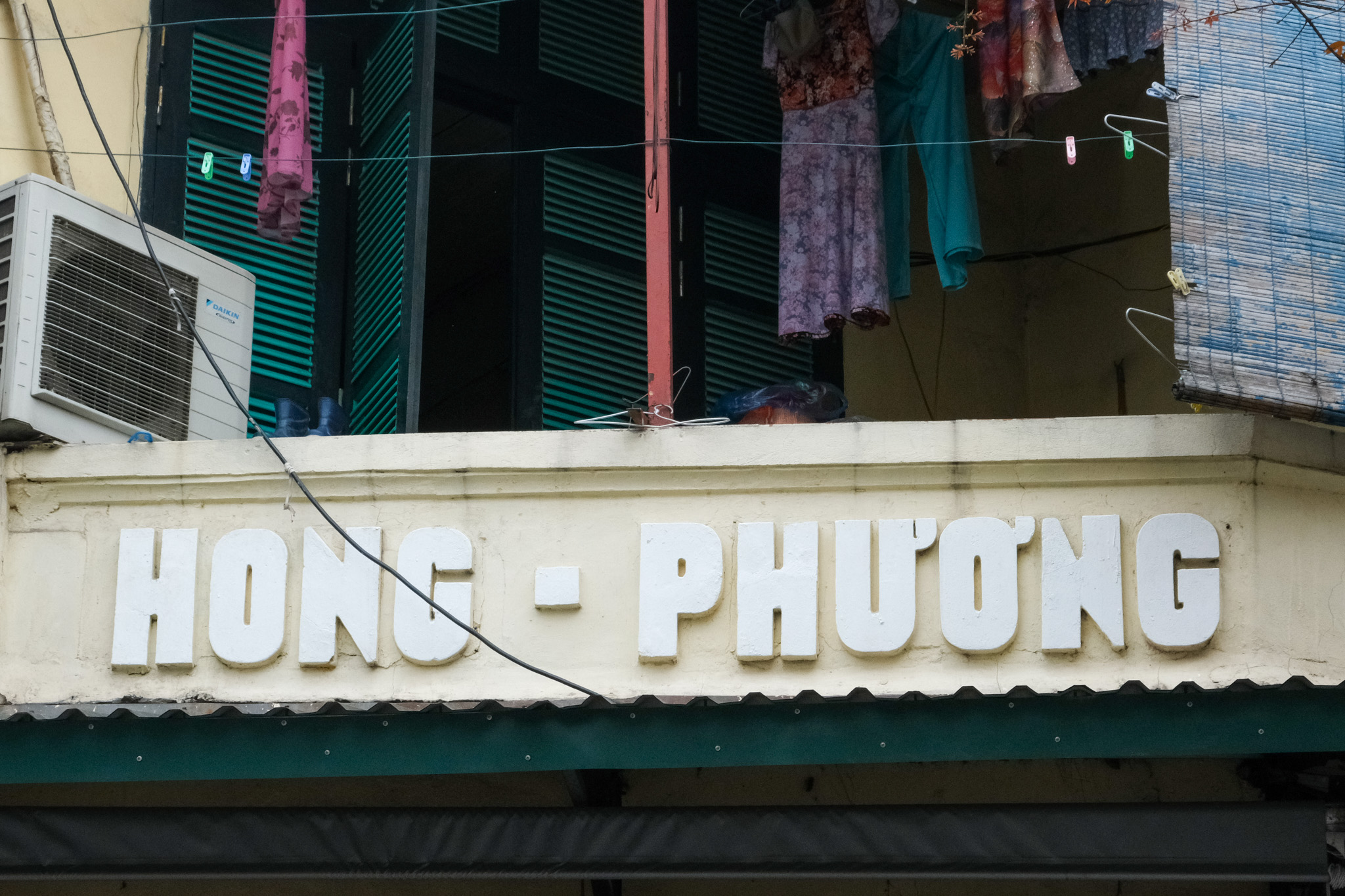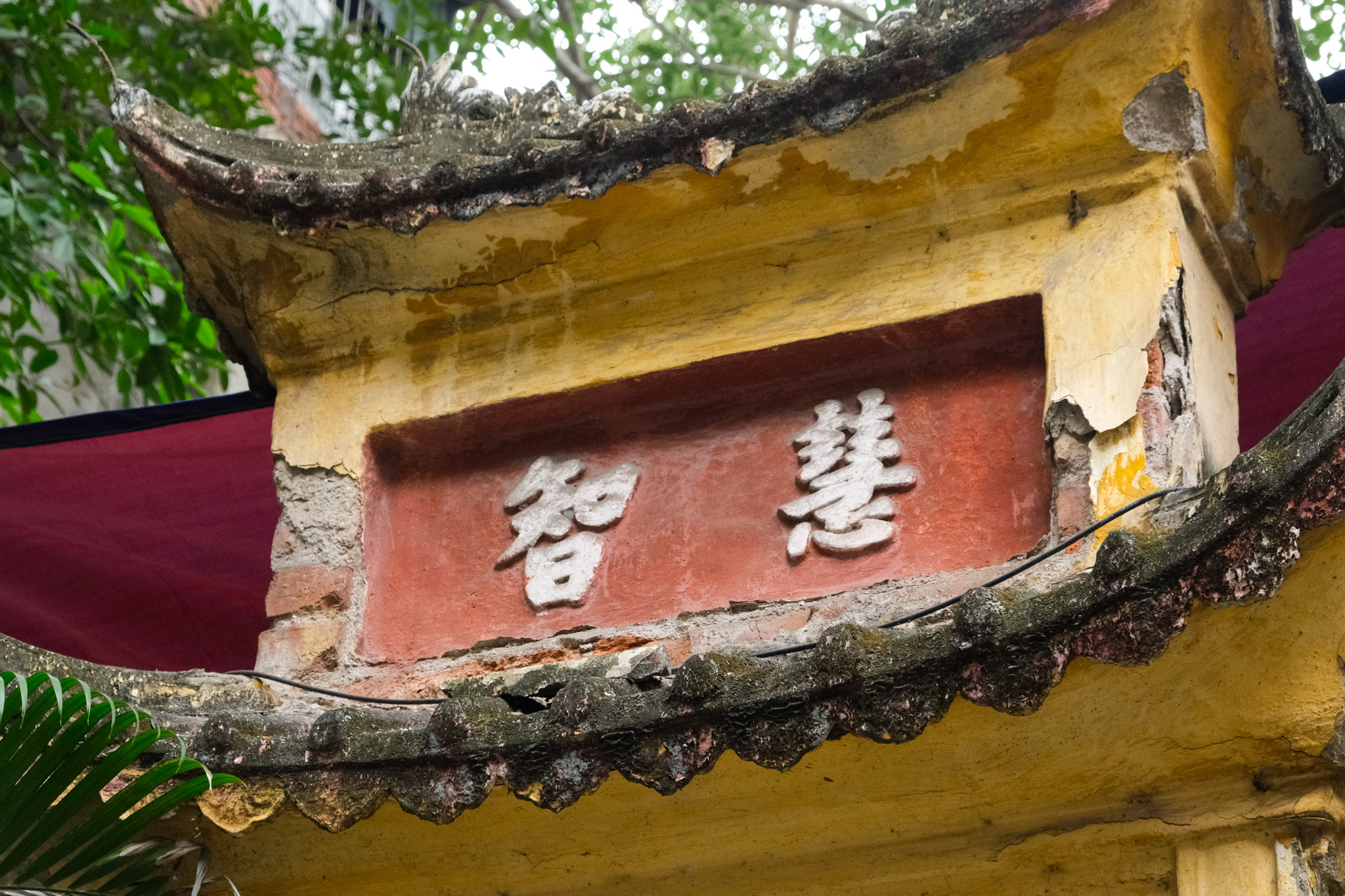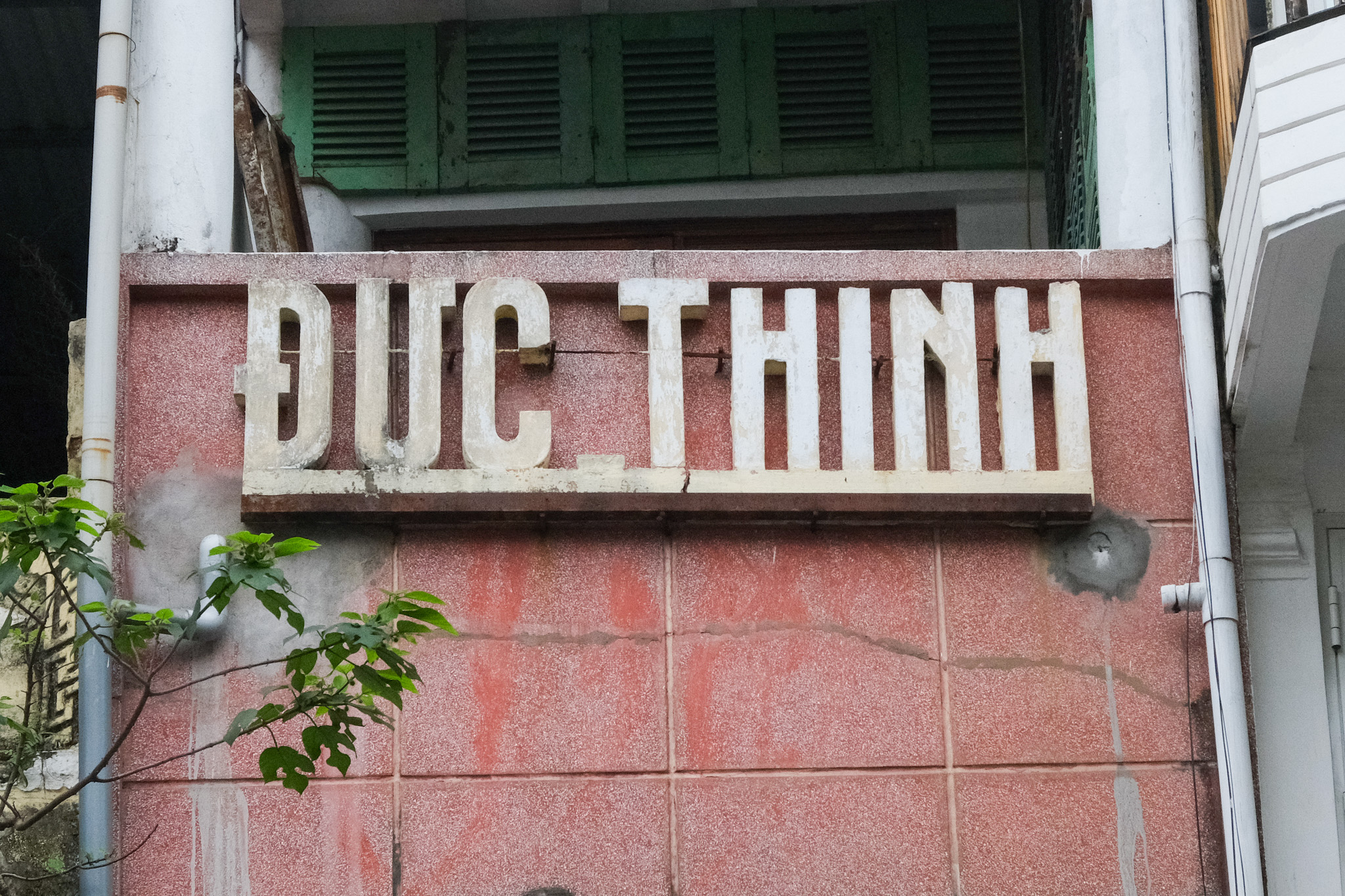
One of the typographic highlights of wandering through Hanoi’s old quarter is catching a glimpse of the cast concrete nameplates adorning many of the buildings there. Called “tube houses (nhà ống), these buildings are narrow, tall, and deep (Business Insider, 2022). Many of these houses were built in the 1920’s and 1930’s during French colonial rule, so the nameplates often have a geometric, art deco style (Đức Lợi Hùng Tướng, Hiệu Sách). And because both Vietnamese and Chinese families lived in the old quarter, some buildings have signs in both languages (Ng Đình Phạm Yên Mỹ | 阮廷品 燕美, Nghiêm Xuân Thúc | 影相 嚴萅叔 | Nghiêm Photography).
Bao Yen writes in VN Express International, “In the old days, the Old Quarter was occupied by mainly small traders and craftsmen who used the fronts of their houses to ply their trade before retiring into their depths.” These days the buildings may not be owned by the same family, but the original family nameplate has been preserved (VN Express International, 2017).
In a conversation with Simon Richards, whose Typography in Vietnam project identified and documented classic Vietnamese typographic styles, he shared a story of visiting the fourth floor of a house with cast concrete letters, and finding the original wood molds for the letters. He says, “It was rotting away, but you could see the mold, the cast of how they made the letters in concrete. And that’s why they still exist because they were made out of super concrete.”
Next time you’re in Hanoi, look up—above the busy advertisements at the street level, these treasures from the past stand out as an example of living typographic history.