


The American photographer Walker Evans (1903–1975) is best known for his “lyrical documentary” photography for the Resettlement (later Farm Security) Administration, which captured life during the Great Depression in the United States. According to an essay by The Metropolitan Museum of Art, “his principal subject was the vernacular,” (Walker Evans) and during his travels around the US, one of the vernacular subjects Evans focused on was signage and advertising.

The book Walker Evans: Signs published by The Getty Museum highlights 50 images by Walker Evans from the Getty collection. Cultural critic Andrei Codrescu’s essay accompanying the images sets the stage for Evans’ photographs by describing the 20th century as one of “popular writing… lettering that invaded every nook and cranny and even wrote the skyline.” He argues that Evans’ photographs didn’t just record signs—they taught viewers “how to see America.”
An interesting fact revealed early in Codrescu’s essay was that Evans’ father worked in advertising. In some ways perhaps Evans’ preoccupation with signage and lettering was a response and reaction to this early exposure. As Codrescu says, “It may be precisely in exploring the gap between the cheerful optimism of advertising propaganda and the reality of Depression-stricken America that Evans found in his art.”
As someone who is fascinated by what public lettering tells us about a particular time, place, and culture, I find this collection of photographs profoundly compelling. Both Evans’ photographs from across the United States and from Havana in 1933 give us a snapshot of societies in the midst of transition. They show us how much has changed since that time, and also how much has not. I am draw in particular to the small local shop-keeper advertisements such as Roadside Stand Near Birmingham with its wide array of serif and sans-serif fonts and accompanying fish illustration, and Star Pressing Club, a sign for clothing care—a service that has evolved into the modern dry cleaners in the US, but that still exists in other countries (see pressing signs in this project’s collection). I would recommend this book for its evocative photographs and ability to transport the reader to a different time and place.
Selected Images

Roadside Stand Near Birmingham / Roadside Store Between Tuscaloosa and Greensboro, Alabama by Walker Evans; courtesy of the J. Paul Getty Museum
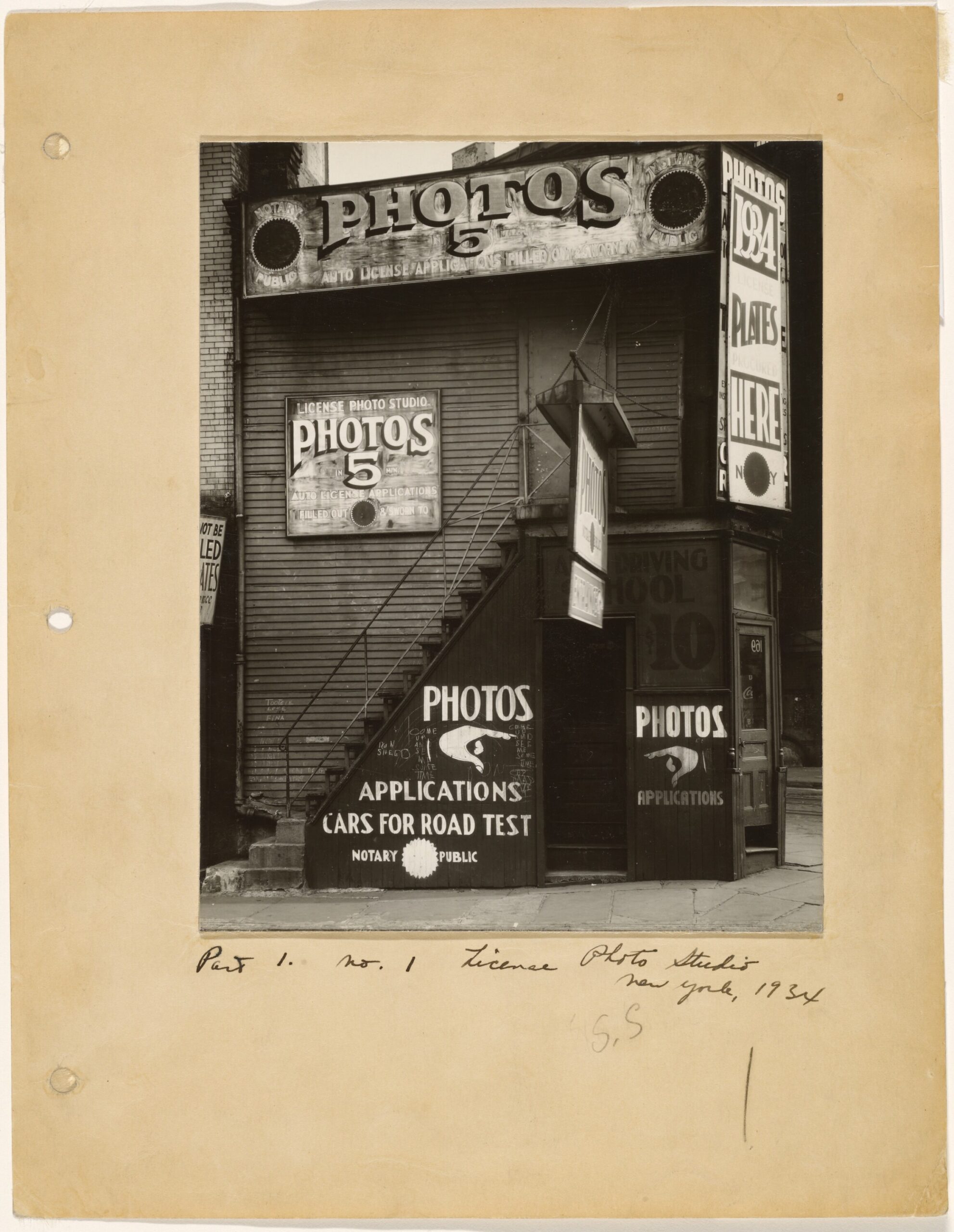
License Photo Studio, New York by Walker Evans; courtesy of the J. Paul Getty Museum

Excursion Sign by Walker Evans; courtesy of the J. Paul Getty Museum

Street Scene, New Orleans, Louisiana by Walker Evans; courtesy of the J. Paul Getty Museum

Show Bill, Demopolis, Alabama / Poster, Alabama by Walker Evans; courtesy of the J. Paul Getty Museum
1 thought on “Walker Evans’ Signs”
Comments are closed.